Top Ten Tips to improve Eczema Management
NO
PHARMACEUTICAL INFLUENCE
Top Ten Tips to improve Eczema Management
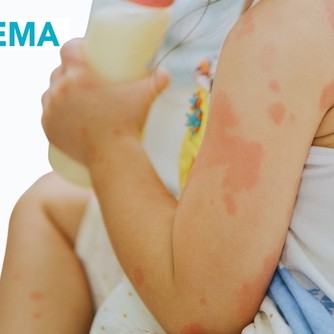
How many times this week have you seen a child with eczema? It would be an unusual week if you haven’t. It doesn’t need me to tell you how common eczema is, affecting 15-20% of children, and the prevalence is rising. We know what a miserable condition it can be - ‘eczema’ comes from the ancient Greek word to ‘boil’, which neatly sums up how it can feel, resulting in scratchy, irritable, sleep deprived children (and parents!).
For such a common condition, research tends to come in dribs and drabs, but there have been a number of useful studies and nuggets in the guidelines published over the past few years, which I thought I’d share with you in a ‘Top Ten Tips’.
1) The importance of emollients. Sounds obvious but it can be easy to gloss over the importance of emollients - the Primary Care Dermatology Society (PCDS) recommend ‘Complete emollient therapy to the whole skin every day’, but which one to recommend? The BEE trial published in 2022 was an RCT based in English Primary Care looking at the effectiveness of a range of emollients which concluded there was no one type of emollient more effective than another. An associated qualitative arm to BEE highlighted that different people like different emollients, which supports the NICE recommendation to offer alternative emollients if initial ones aren’t effective. It’s worth considering a range of emollients e.g. creams which are thinner and easier to apply in the day and thicker ointments before bed.
2) A couple of pointers on moisturisers. Ideally prescribe as pump dispensers, but for ointments in tubs get parents to scoop out with a clean spatula or spoon, not fingers, to reduce the risk of bacterial contamination. Apply emollients downwards in the direction of the hairs - this reduces the risk of folliculitis.
3) Bath emollients? Simple answer - No. We have pretty good RCT evidence they are ineffective and NICE specifically say ‘Do not offer emollient bath additives to children with atopic eczema’. Just recommend parents use their usual emollient as a soap substitute in the bath or shower - easier for them and good for the drug budget.
4) Language is important. Qualitative evidence has shown our traditional terminology of ‘emollients’ and ‘steroid creams’ are potential barriers to use - one of the commonest reasons for treatment ‘failure’ is simply not applying enough topical treatment. We all know that parental fear of ‘steroid’ is often a factor in underuse, so ‘flare control creams’ has been proposed as a more neutral (and accurate) term, and that ‘moisturisers’ (rather than emollient) better reflects most peoples language.
5) Are topical corticosteroids (TCS) safe? Basically yes. As above the fear over TCS side effects remains a barrier, but a systematic review in 2023 was very reassuring. It showed only very rare complications (e.g. skin atrophy) with little/no effect on growth. Similarly a Cochrane review in 2022 showed very low rates of skin thinning, and generally only with the most potent TCS.
6) Which TCS where? The PCDS recommend ‘it is more effective and safer to 'hit hard' using more potent treatments for a few days than it is to use less potent treatments for longer periods of time’. For children's trunk and limbs use moderate potency e.g. Eumovate ® (clobetasone butyrate 0.05%) or Betnovate-RD ® (betamethasone valerate 0.025%) and for children’s face mild potency e.g. 1% hydrocortisone - apply thinly daily (BD dosing is no more effective) for up to 14 days.
7) Frequent flares? Consider the steroid weekend regime. This is a really useful tip that if the child is getting regular flares, once the flare is under control tell the parents to apply the TCS daily for two days each week to the sites of the previous flares (e.g. Saturday and Sunday) even if the skin is looking pretty good - trial for 3-6 months then review.
8) I think they’ve got a food allergy causing the eczema…. The vast majority don’t. The PCDS state that ‘Most children with mild-moderate eczema that respond well to treatment do not have a food allergy. In such patients, and in the absence of any close temporal link between a particular food causing a flare of eczema, investigations and dietary restrictions are not recommended’. Bundles of IgE tests are not helpful (as per the recent BSACI primary care allergy testing guideline), but if the child has reproducible immediate flares (within 1 hour) to specific foods, especially if associated with GI symptoms, allergy testing/referral should be considered.
9) Stop scratching! Is literally the worst thing you can say to a child who is digging into their eczema, but breaking the itch/scratch cycle is a key component to managing eczema. An excellent leaflet from the National Eczema Society (recently re-branded Eczema UK) is worth directing parents to for help with this. It’s worth noting antihistamines are rarely effective.
10) Go ECO. And finally, if there is only one thing to take away from this blog, it’s the brilliant ECO (eczema care online) support website. It has RCT evidence to support it’s use with clinically significant improvements in eczema with a NNT of only 6. It’s a really well laid out website with key ‘golden rules’ on moisturisers and flare control creams, more detailed information about applying creams, and lots of practical tips on the wider aspects of eczema and it’s consequences (stress, sleep etc) and that all important itch/scratch cycle!
Dr Rob Walker
26th May 2026
Join us at one of our upcoming courses or live webinars



Purchase an NB Plus subscription for unlimited access to the NB Medical digital library
Recent NB Blogs
Need an immediate update? – all our courses are available on demand
Did you find this useful?
You can quickly add CPD to your account by writing a reflective note about the Top Ten Tips to improve Eczema Management post you've read.
Log in to your NB Dashboard and use the 'Add Reflective Note' button at the bottom of a blog entry to add your note.