Nitrous Oxide Neuropathy: No Laughing Matter
NO
PHARMACEUTICAL INFLUENCE
Nitrous Oxide Neuropathy: No Laughing Matter
Danny looks a bit on edge. He’s 20 years old and has what sounds like peripheral neuropathy in his feet. It started three months ago and is getting worse. Now he’s feeling a bit unsteady on his feet.
Eye balling Danny, he looks generally ok. So, it would be easy to miss the fact that he has a time-critical medical emergency, one that we could treat with a simple intervention and without which he may be left with permanent neurological sequelae, because we didn’t ask the crucial question: have you been using nitrous oxide?
When NICE published its first guidance on the diagnosis and management of vitamin B12 deficiency in 2024, it highlighted an unusual risk factor: recreational use of nitrous oxide. You might assume this is an uncommon issue, but in the UK, particularly among younger groups, use is endemic, and in some areas an epidemic.
In 16-24 years old it is the second most commonly used drug in the UK, with somewhere between 2 and 9% of 16-24 year olds using N2O, although some reports suggest 25% have tried it.
Our key concern here is nitrous oxide-induced subacute combined degeneration of the cord (N2O-SACD). Nitrous oxide inactivates vitamin B12 through oxidation of the cobalt atom central to B12 function, rendering it useless. B12 deficiency can be profound, and nerve damage with delayed treatment may be permanent.
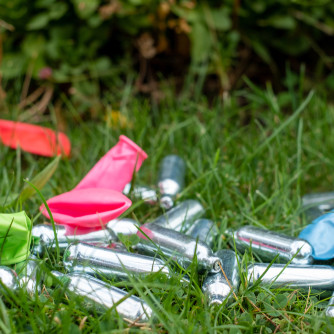
Recreational N2O is the same chemical used for medical purposes. Its typically stored in small single-use cannisters (about finger length, containing approximately 8g of gas), which are then cracked open and inhaled, often via small balloons. Due to the small amounts and short duration of action, people often use multiple cannisters in a session – lighter users may have 1 to 5, with >20 being considered higher doses. Much larger containers with up to 2kg of gas are now being targeted at non-legitimate use, making it easier to consume very large amounts.
There is a strong dose response with N2O, with most myeloneuropathy in people using N2O frequently in the long term or high doses over shorter periods. The risk is also exacerbated by existing low B12 levels.
How does nitrous oxide-induced subacute combined degeneration of the cord present?
The initial symptom is typically distal paraesthesia, mostly in the feet although hands may also be affected. Some patients describe the feeling of their skin crawling. As it progresses (usually rapidly over a handful of weeks) patients develop unsteadiness, ataxia and lower limb weakness. Bladder and bowel dysfunction may occur, including incontinence or retention, as can sexual dysfunction.
Patients rarely offer N2O use unless asked and a delay between use and onset of symptoms of days to weeks may mean they don’t realise the connection, so a key learning point for primary healthcare clinicians is to specifically ask about this in cases of suggestive clinical features, especially in younger people where classic causes of peripheral neuropathy are unlikely and drug use is common.
Guidance endorsed by the Association of British Neurologists, published in Practical Neurology in 2023, recommends urgent treatment in suspected cases.
Frustratingly, this management pathway is aimed primarily at A&E presentations, with only a brief mention about general practice. For us, the expectation is that our patients will be seen rapidly by the neurology team (i.e. on the day) so we need to pick up the phone and make an acute referral.
You and I know that access for neurology can be very difficult at times, so for me, the key learning point is if that patient cannot be seen on the day, we will want to take action ourselves.
First, take bloods before starting replacement B12: FBC, U&E, LFT, TFT, B12, folate plus methylmalonic acid or homocysteine. Checking B12 levels with one of the last two is crucial because standard B12 or holotranscobalamin (active B12) may well appear normal - N2O inactivates B12 but doesn’t degrade the molecule per say, so patients may look like they are replete but could actually be profoundly deficient. This is easier said than done due to the logistics of getting a specimen to the lab in a suitable time frame.
Second, administer treatment: 1mg hydroxocobalamin 1mg IM stat. This will be continued every other day for a minimum of 2 weeks, but longer at that frequency if symptoms have not resolved.
Third, ensure the patient stops using more N2O. Continued use can prevent even the huge doses received parenterally from working.
Back to our patient, Danny. The crucial first step is thinking about N2O use in the differential and direct questioning about it. He tells you that he has been using it regularly for months but with increasing amounts over the past month. He has clinical features consistent with N2O-induced subacute combined degeneration of the cord so we need to pick up the phone to neurology and get him assessed today. If they can’t, he needs bloods, a B12 jab and the information that he needs to stop the N2O. With that, we might have just saved him permanent neurological damage.
Neal Tucker
8th October 2026
Join us at one of our upcoming courses or live webinars



Purchase an NB Plus subscription for unlimited access to the NB Medical digital library
Recent NB Blogs
Need an immediate update? – all our courses are available on demand
Did you find this useful?
You can quickly add CPD to your account by writing a reflective note about the Nitrous Oxide Neuropathy: No Laughing Matter post you've read.
Log in to your NB Dashboard and use the 'Add Reflective Note' button at the bottom of a blog entry to add your note.