Does Urgent Care have an identity crisis?
NO
PHARMACEUTICAL INFLUENCE
Does Urgent Care have an identity crisis?
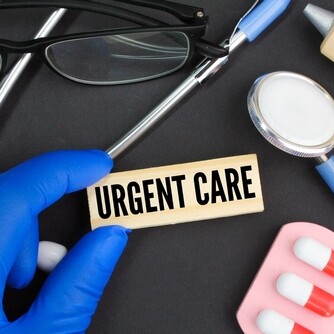
What even is urgent care? We hear this term used liberally, yet there's no universally accepted definition of what it actually means. Ironic, really, for a discipline where ambiguity and uncertainty sit at the very heart of its clinical practice. A fascinating BJGP article earlier this year charts the evolution of urgent care in the UK, from its humble origins in GP out-of-hours provision in the 1990s, through GP co-operatives, to the sprawling, multi-organisational behemoth of today. We now have NHS 111, walk-in centres, urgent treatment centres, community pharmacies, minor injury units and same-day GP services. It's like a sprawling Georgian mansion with so many front doors that nobody can remember where the entrance is anymore. And now, with another £140 million being invested in urgent care infrastructure, perhaps we should be asking whether we need more (or bigger!) front doors, or perhaps just a better way of navigating the ones we've already got?
Who's behind all those doors anyway?
Urgent care is no longer the sole preserve of GPs. Its workforce incorporates Advanced Nurse Practitioners, Emergency Care Practitioners, Physician Associates, Advanced Clinical Practitioners and many others. Not forgetting the call handlers, health advisers and reception teams navigating vast volumes of undifferentiated illness.
Even defining what's urgent is surprisingly difficult. Where exactly does it sit in the grey gulf between 'routine' and 'emergency'? Definitions vary across the UK, and unlike General Practice or Emergency Medicine, urgent care lacks a single recognised professional body to unite its diverse workforce.
And if we think clinicians are confused, imagine being a patient! Many find themselves pinballing between services, redirected from A&E to a pharmacy, walk-in centre or NHS 111. What feels urgent to a patient doesn't always match the system's definition. And with routine GP appointments increasingly difficult to access, urgent care often becomes the default option.
The joy of uncertainty
Despite all this, I love working in urgent care. We're among the last bastions of true medical generalism: human Swiss Army knives, ready to tackle whatever comes through the door. We eat uncertainty for breakfast! As Cecil Helman wrote in Suburban Shaman, uncertainty is part of what makes medicine so fascinating. You never quite know who, or what, will walk through your door next.
So here's my 'tentative' definition of urgent care:
A place to go when you're ill but don't need a blue light ambulance. When everything's closed and it can't wait until next week. Somewhere you'll be met by a skilled, broad-based clinician who will listen and care for you.
A course for the clinical coalface
That's the philosophy behind our newly updated 2026–27 Urgent Care Course. It's designed for clinicians from every background, wherever they practise. Rather than organising learning around diagnoses and diseases, we've anchored the teaching around the symptoms and problems patients actually bring us. From life-threatening emergencies to everyday same-day presentations, the emphasis is on practical, evidence-based decisions at the clinical coalface. Good luck out there, whichever front door you work behind!
NB Medical
22nd October 2026
Join us at one of our upcoming courses or live webinars



Purchase an NB Plus subscription for unlimited access to the NB Medical digital library
Recent NB Blogs
Need an immediate update? – all our courses are available on demand
Did you find this useful?
You can quickly add CPD to your account by writing a reflective note about the Does Urgent Care have an identity crisis? post you've read.
Log in to your NB Dashboard and use the 'Add Reflective Note' button at the bottom of a blog entry to add your note.